
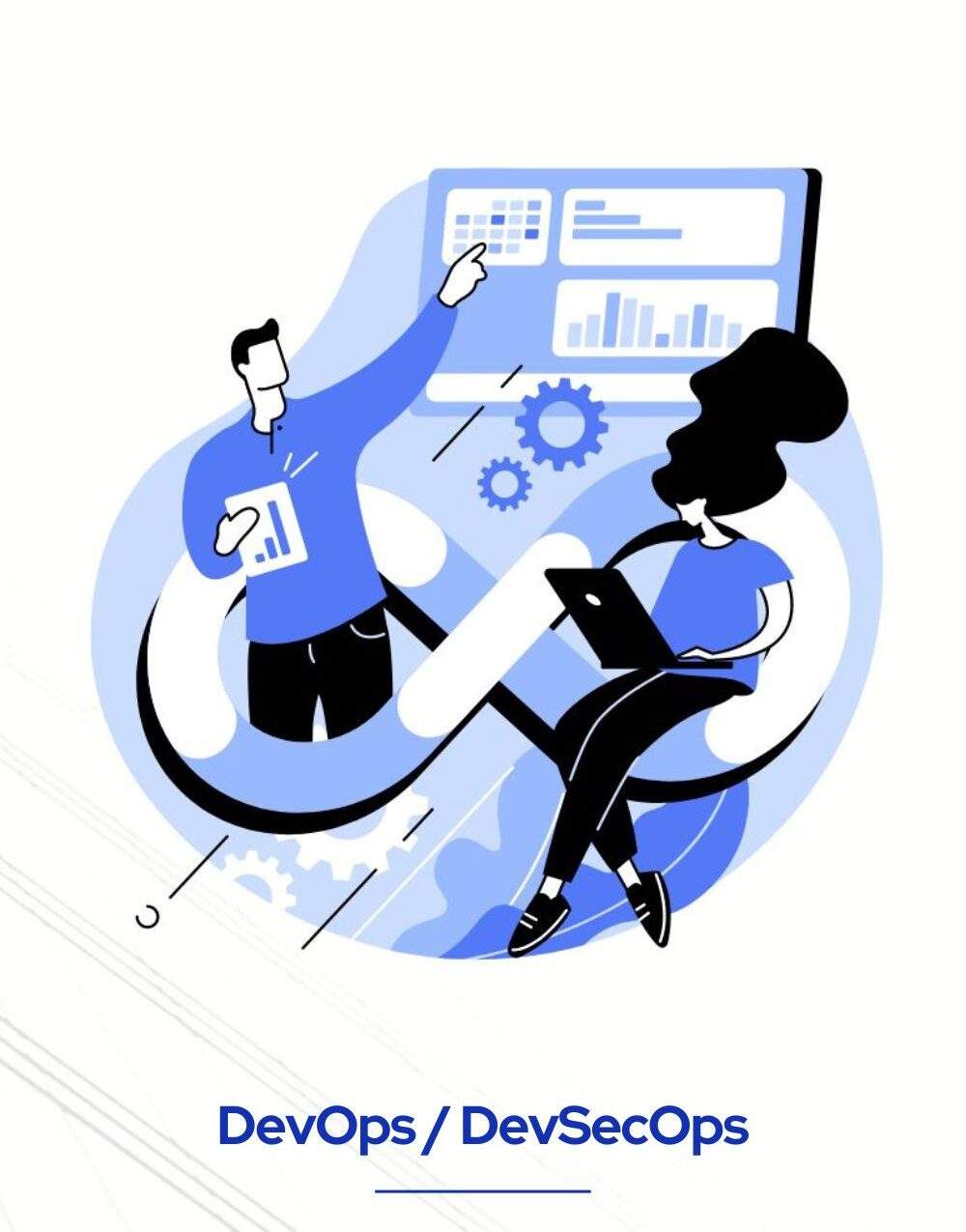

We deliver DevSecOps as a service that accelerates your development pipeline and eliminates delays caused by manual processes or long review cycles. With DevSecOps integrated across the workflow, every change is clearly understood, enabling faster releases, easier incident management, and high-quality, reliable software.
Code Build
Keeping your eye on the ball while performing a deep dive on the start-up mentality to derive convergence on platform integration.
Keeping your eye on the ball while performing a deep dive on the start-up mentality to derive convergence on platform integration.




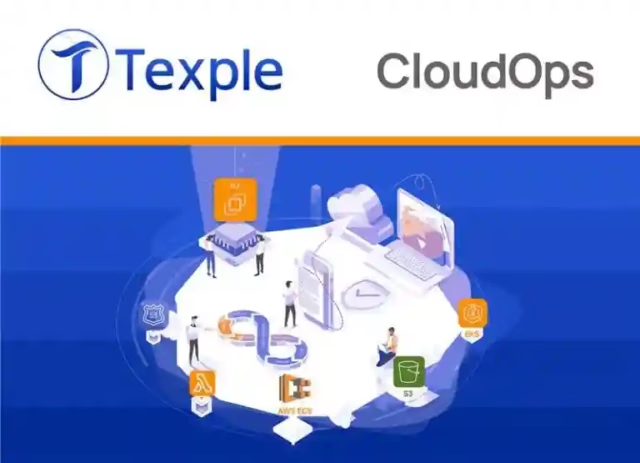
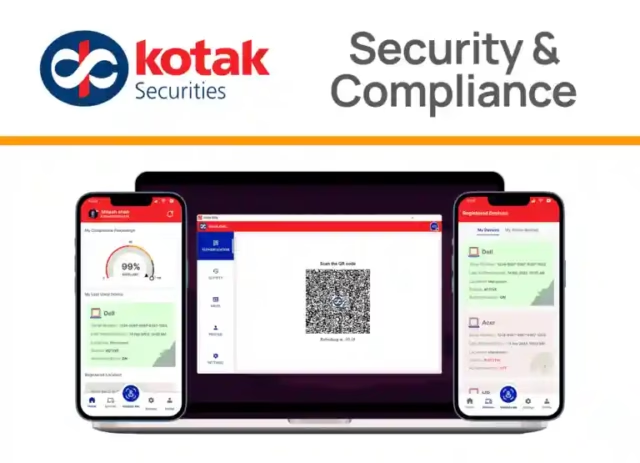

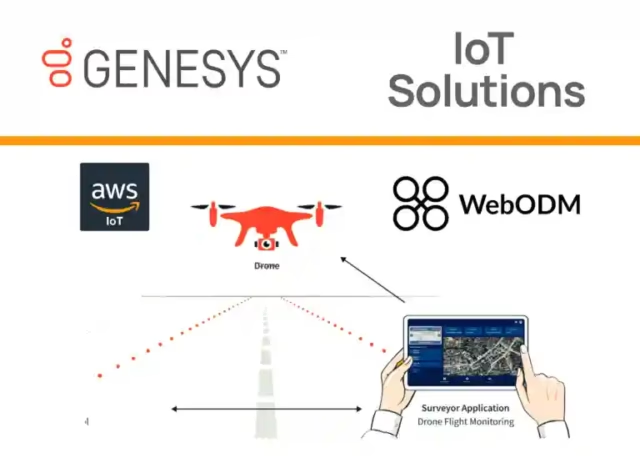
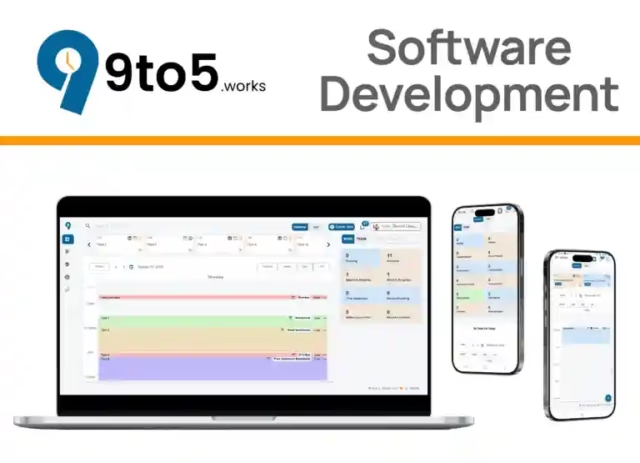



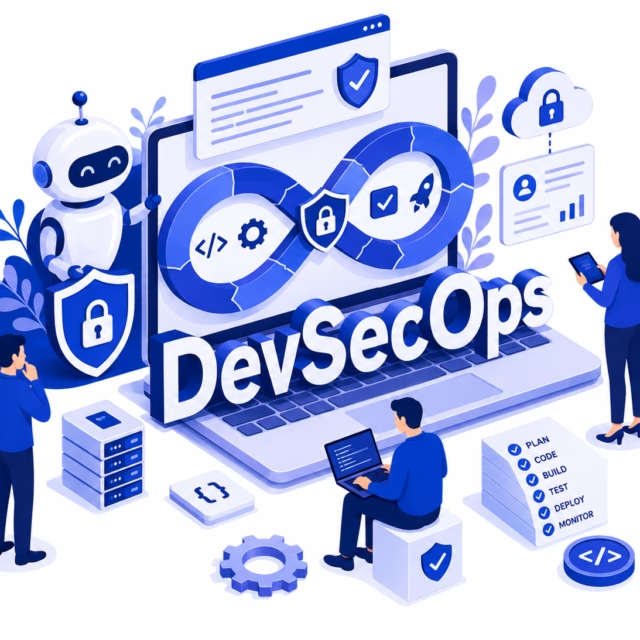
DevSecOps integrates security practices directly into the DevOps software development lifecycle from the very beginning. By automating security checks, continuous compliance, and vulnerability scanning throughout development and deployment, enterprise applications stay secure without sacrificing release velocity.
DevSecOps shifts security left by embedding automated static and dynamic application security testing (SAST/DAST), container scanning, and secrets detection directly into continuous integration/continuous delivery (CI/CD) pipelines to fix risks early before production.
We integrate automated security scanning directly into your developer workflows and CI/CD tools (like GitLab, Jenkins, or AWS CodePipeline). By executing Static Application Security Testing (SAST), secret scanning, and dependency vulnerability checks on every pull request, security issues are detected and remediated before code reaches production.
SAST (Static Application Security Testing) analyzes source code for internal vulnerabilities during development. DAST (Dynamic Application Security Testing) tests running applications externally for runtime flaws and API vulnerabilities. SCA (Software Composition Analysis) scans third-party open-source libraries and dependencies for known CVE risks and license compliance.
We apply Zero Trust architectures by eliminating hardcoded credentials, enforcing short-lived automated authentication tokens, restricting container permissions using namespaces and cgroups, and implementing strict least-privilege Role-Based Access Control (RBAC) across all microservices and APIs.
We embed policy-as-code security guardrails (using tools like Terraform Sentinel and Checkov) into your infrastructure pipelines. This automatically blocks non-compliant infrastructure deployments—such as unencrypted S3 buckets or open security groups—before resources are provisioned in the cloud.
©2022 Texple. All rights reserved.
Are u looking for digital transformation? Or even a comprehensive solution? We are here to help.