


We help you create new or improve your current architecture and convert it to a Cloud Native approach. We help you create a roadmap to bring the cloud-native paradigm to your organization, with minimal disruption.
Code Build
Keeping your eye on the ball while performing a deep dive on the start-up mentality to derive convergence on platform integration.
Keeping your eye on the ball while performing a deep dive on the start-up mentality to derive convergence on platform integration.



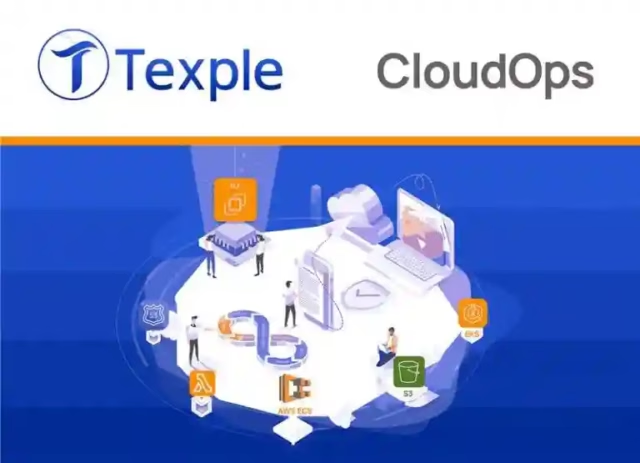
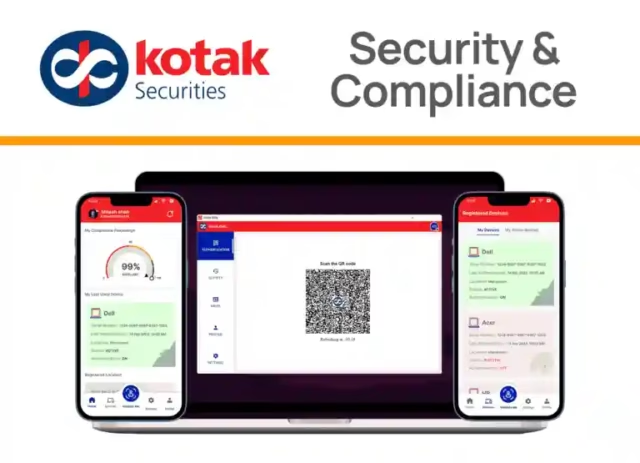
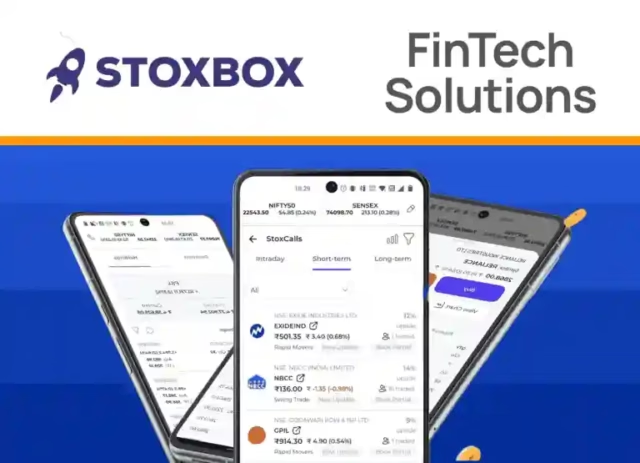
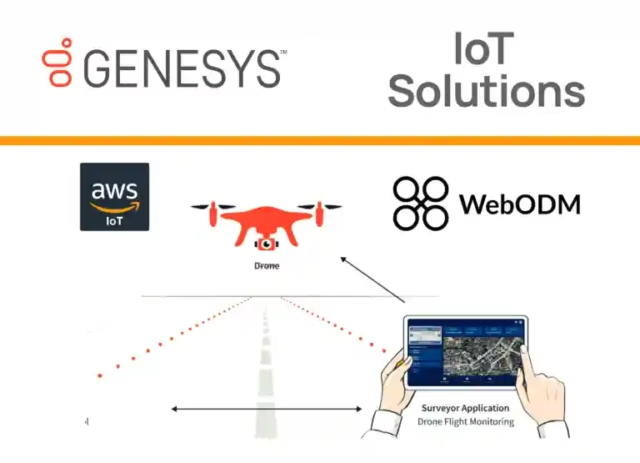
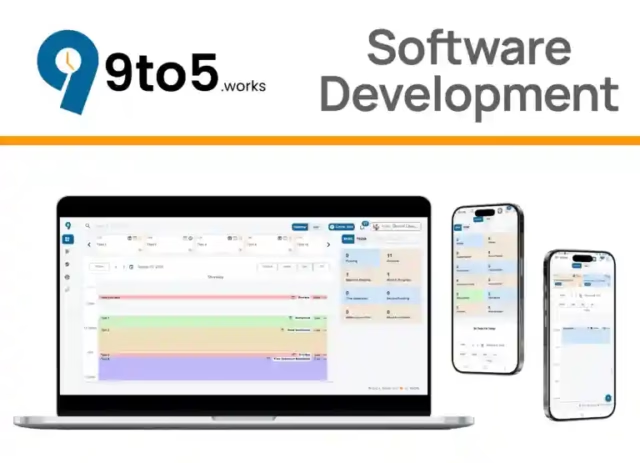
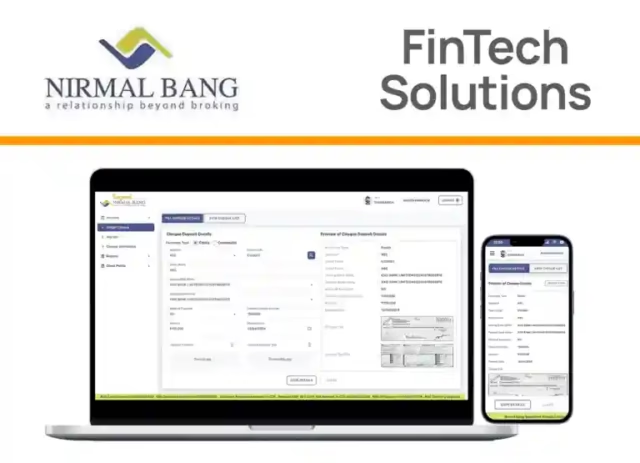
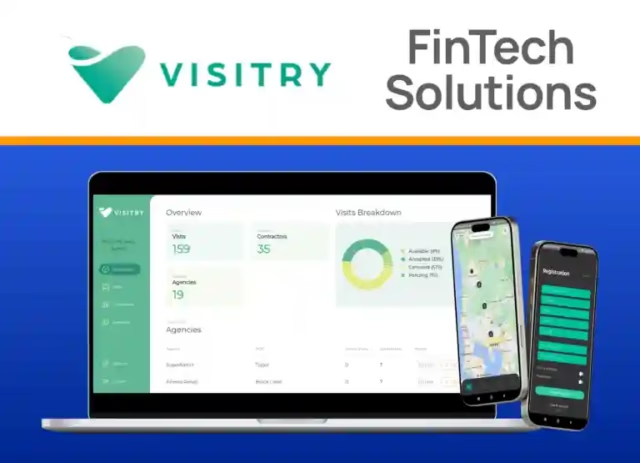
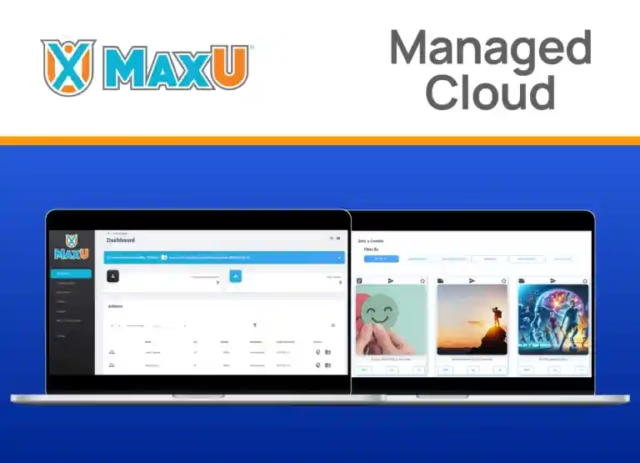


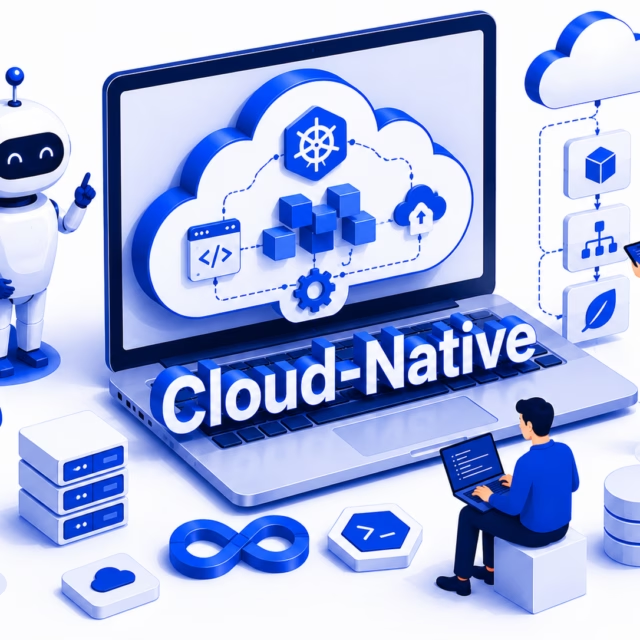
Cloud-native development builds applications specifically designed to leverage cloud computing models, using microservices architectures, containerization, serverless computing, and continuous integration to deliver scalability, resilience, and rapid deployment cycles.
Cloud-native applications provide automatic scaling, high fault tolerance, vendor flexibility, faster feature releases, and lower infrastructure overhead by fully utilizing managed cloud services and container orchestration.
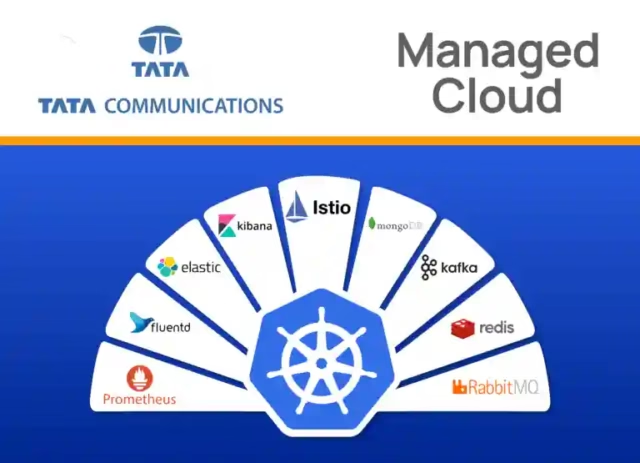
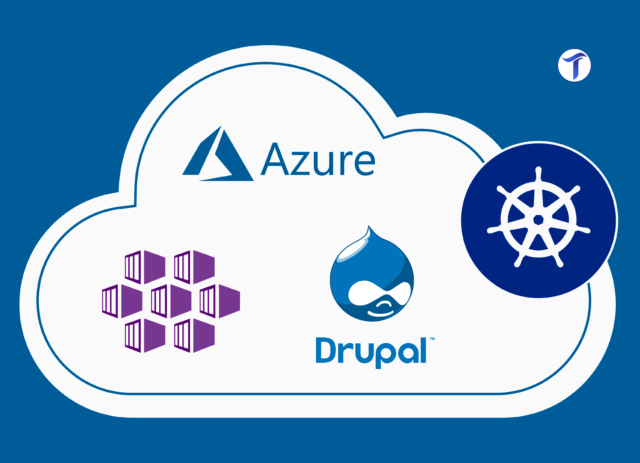
We deploy and manage containerized microservices using Amazon ECS, Kubernetes (EKS), or Azure Kubernetes Service (AKS). This ensures automated container provisioning, seamless autoscaling during traffic surges, self-healing node clusters, and zero-downtime rolling deployments.
An API-first approach builds modular, well-documented interfaces before developing front-end or core services. This allows different enterprise microservices and third-party applications to integrate securely, enabling faster iteration and high system extensibility.
By integrating serverless components (such as AWS Lambda and EventBridge), applications run code only in response to specific triggers. This eliminates idle server costs, scales automatically from zero to thousands of concurrent requests, and reduces ongoing infrastructure maintenance.
We implement centralized logging, distributed tracing, and real-time monitoring across service meshes. This gives technical teams complete visibility into service performance, API latencies, and system health metrics to resolve bottlenecks before they impact end users.
©2022 Texple. All rights reserved.
Are u looking for digital transformation? Or even a comprehensive solution? We are here to help.